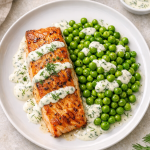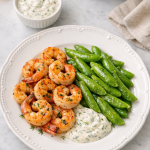
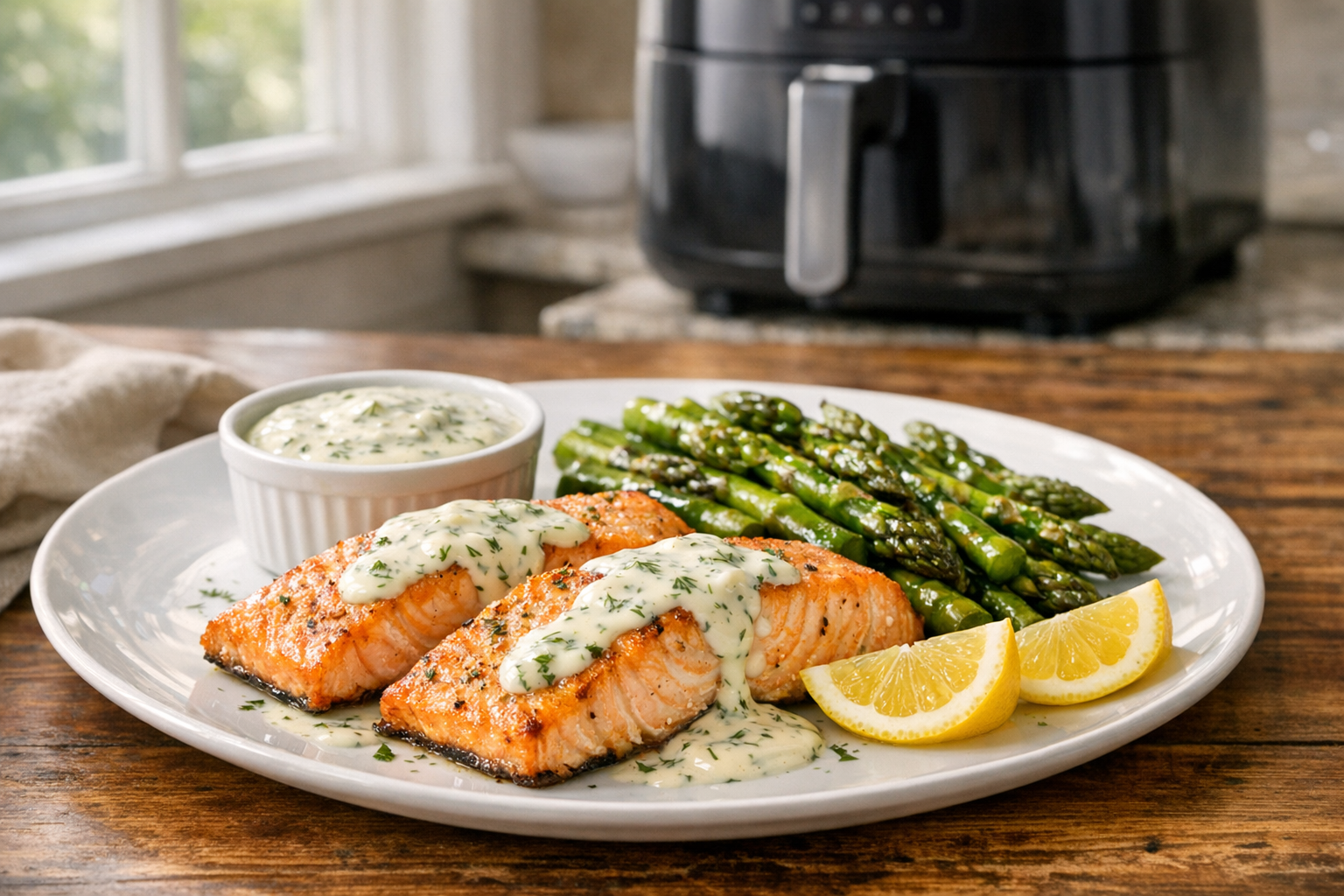
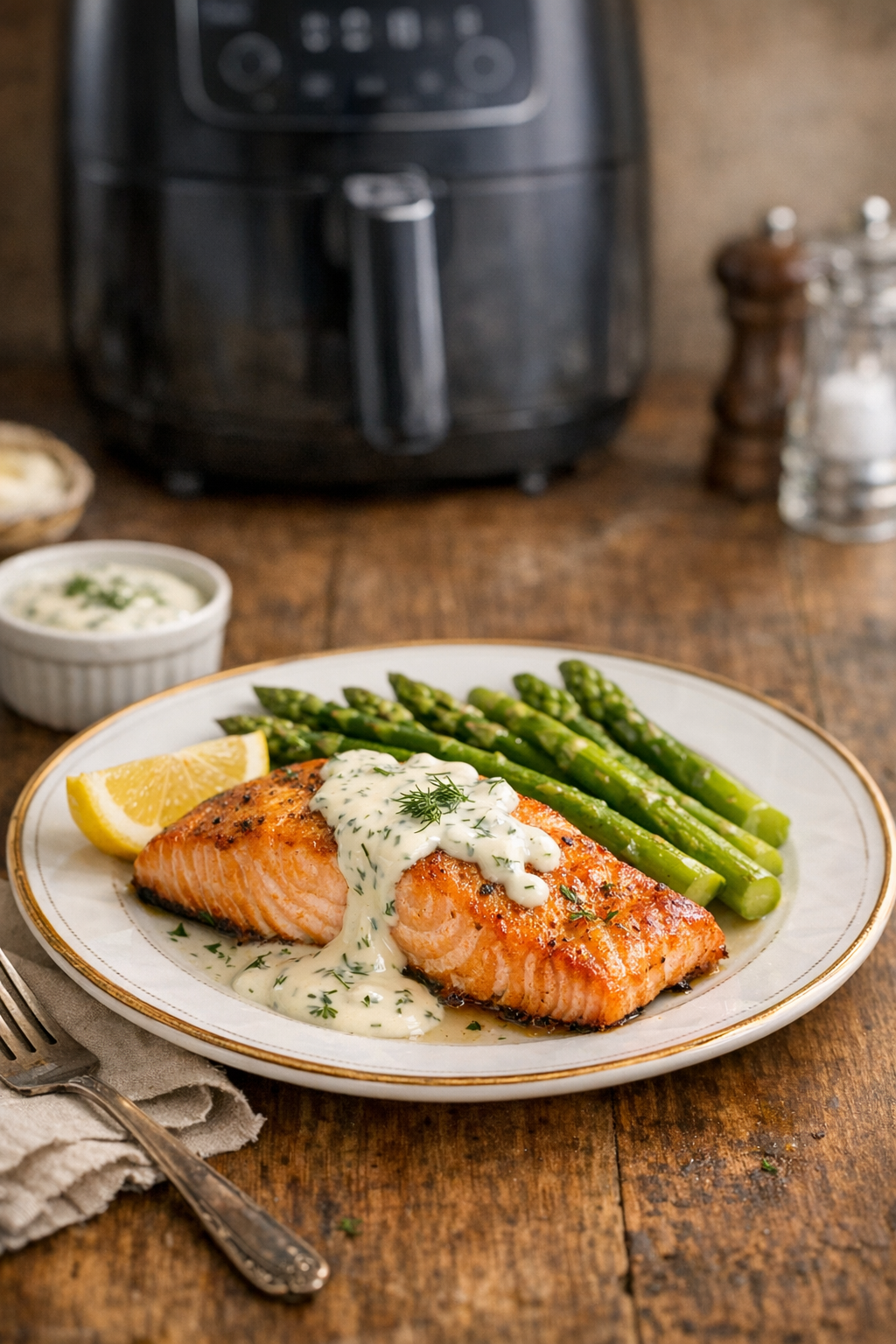
This 30-minute dinner pairs tender air fryer salmon with asparagus tips and a quick creamy dill sauce you can stir together while everything cooks. It’s streamlined, low-mess, and tastes like something you’d order at a bistro—without turning on the oven.
Why This Air Fryer Recipe Works
Salmon cooks fast in moving hot air, so you get a lightly crisp surface while the center stays juicy. Cooking the asparagus tips alongside means fewer pans and a built-in veggie side.
The creamy dill sauce is cold and bright, which balances the rich salmon and adds a fresh, herby finish. Since the sauce is no-cook, the whole meal stays on the 30-minute track.
Ingredients You’ll Need
- 4 salmon fillets (about 6 oz each), skin-on or skinless
- 1 bunch asparagus tips (trimmed; thin or medium thickness works best)
- 1 tbsp olive oil (plus more if needed)
- 1 tsp kosher salt, plus more to taste
- 1/2 tsp black pepper
- 1 tsp garlic powder
- 1/2 tsp paprika (optional, for color)
- 1 lemon (zest + wedges for serving)
For the creamy dill sauce:
- 1/2 cup mayonnaise
- 1/4 cup sour cream (or Greek yogurt for a tangier sauce)
- 2 tbsp fresh dill, finely chopped (or 2 tsp dried dill)
- 1 tbsp lemon juice (plus more to taste)
- 1 tsp Dijon mustard
- 1 small garlic clove, grated (or 1/4 tsp garlic powder)
- Salt and pepper to taste
- 1–3 tsp water (only if needed to thin)
How to Make 30-Minute Air Fryer Salmon with Asparagus Tips and Creamy Dill Sauce in the Air Fryer
1) Make the creamy dill sauce. In a bowl, stir together mayo, sour cream, dill, lemon juice, Dijon, and garlic. Season with a pinch of salt and pepper. Add a teaspoon of water if you want it more drizzleable, then refrigerate while you cook.
2) Prep the salmon. Pat salmon dry with paper towels (this helps the surface brown). Rub with a little olive oil, then season with salt, pepper, garlic powder, and paprika if using. Finish with a little lemon zest.
3) Prep the asparagus tips. Toss asparagus tips with olive oil, a pinch of salt, and pepper. If your asparagus is very thick, slice lengthwise so it cooks through quickly.
4) Preheat and arrange. Preheat the air fryer. Place salmon fillets in the basket in a single layer, leaving space around each piece. Add asparagus tips alongside if they fit without piling; otherwise cook them right after the salmon.
5) Air fry. Cook until the salmon flakes easily with a fork and the asparagus tips are crisp-tender with browned edges. (Exact timing depends on fillet thickness—see the next section.)
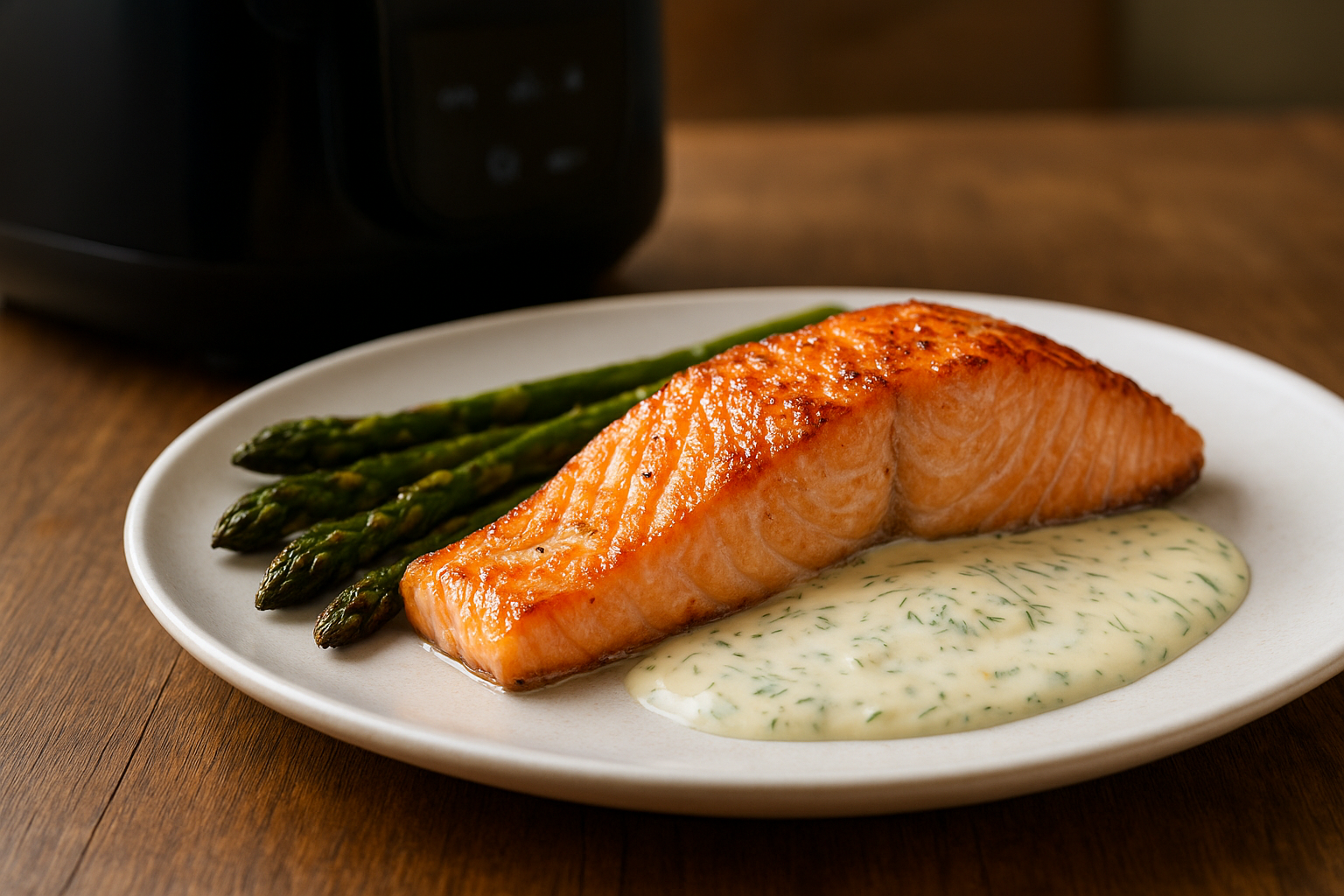
6) Serve. Plate salmon with asparagus tips. Spoon or drizzle creamy dill sauce on the side (or over the salmon) and serve with lemon wedges.
Air Fryer Time and Temperature
Air fryer setting: 390°F
- Salmon (1-inch thick fillets): 8–10 minutes
- Thinner fillets (3/4-inch): 7–9 minutes
- Asparagus tips (thin/medium): 5–7 minutes, shaking once
If you’re cooking salmon and asparagus together, start checking the asparagus early. You can pull the asparagus out when it’s done and let the salmon finish.
Tips for the Best Results
- Dry the salmon well. Moisture is the enemy of browning, especially in an air fryer basket.
- Don’t crowd the basket. Airflow is what cooks and browns; cook in batches if needed.
- Use similar-size fillets. Matching thickness keeps everything done at the same time.
- Pull early, rest briefly. Salmon continues to cook for a minute or two after you remove it.
- Keep the sauce cold. It tastes brighter when it’s chilled while the salmon is hot.
If your asparagus tips are browning too fast, reduce the temp to 375°F for the asparagus portion or add them halfway through the salmon cook time. If your salmon is browning faster than you like, move it slightly away from the hottest spot (often the center) or drop the temp by 10–15 degrees next time.
Variations and Substitutions
- Swap the herb: Use chives or parsley if you’re out of dill; add a small pinch of dried tarragon for a classic vibe.
- Make it spicier: Add a pinch of cayenne to the salmon seasoning or stir hot sauce into the dill sauce.
- Change the vegetable: Green beans or broccolini cook similarly; cut thicker stems so they finish on time.
- Dairy-free sauce option: Use a dairy-free mayo and skip the sour cream; brighten with extra lemon juice and dill.
- Skin-on note: If using skin-on salmon, cook skin-side down for easier lifting and a cleaner presentation.
What to Serve With It
This is great with simple sides that don’t compete with the dill sauce. Try fluffy rice, quinoa, or roasted baby potatoes.
- Garlic rice or lemony couscous
- Air fryer baby potatoes or sweet potato cubes
- Simple side salad with vinaigrette
- Crusty bread to swipe through extra sauce
For another easy side idea, check Air Fryer Recipes.
Storage and Reheating
Store salmon and asparagus in separate airtight containers if possible, and keep the sauce in its own container. Everything keeps well in the fridge for up to 2 days.
To reheat, warm salmon in the air fryer at 350°F for 3–5 minutes, just until heated through (overheating dries it out). Reheat asparagus for 2–3 minutes at 350°F to bring back some edge crispness, then add sauce after reheating.
If you’re planning leftovers, this reheating guide may help: Air Fryer Reheating Guide.
FAQ
- Can I cook salmon and asparagus at the same time in the air fryer?
Yes, as long as your basket isn’t crowded and the asparagus isn’t piled. Start checking asparagus around the 5-minute mark and remove it when it’s crisp-tender while the salmon finishes. - What temperature should salmon be cooked to?
Cook until it flakes easily and looks opaque through most of the center. If you use a thermometer, many cooks pull salmon around 125–130°F for a moist center and let it rest; others prefer closer to 140–145°F for firmer doneness. - Do I need to flip salmon in the air fryer?
Usually no. Cooking it in a single layer with good airflow is enough; flipping can cause the fillet to break, especially if it’s delicate or skinless. - Why is my salmon sticking to the basket?
Salmon can stick if the basket isn’t lightly oiled or if you try to lift it too soon. Brush or spray a thin coat of oil on the basket, and let the salmon rest 1 minute after cooking before removing. - Can I use dried dill in the sauce?
Yes. Use about 2 teaspoons dried dill in place of 2 tablespoons fresh, then taste and adjust with more lemon juice and a pinch of salt.