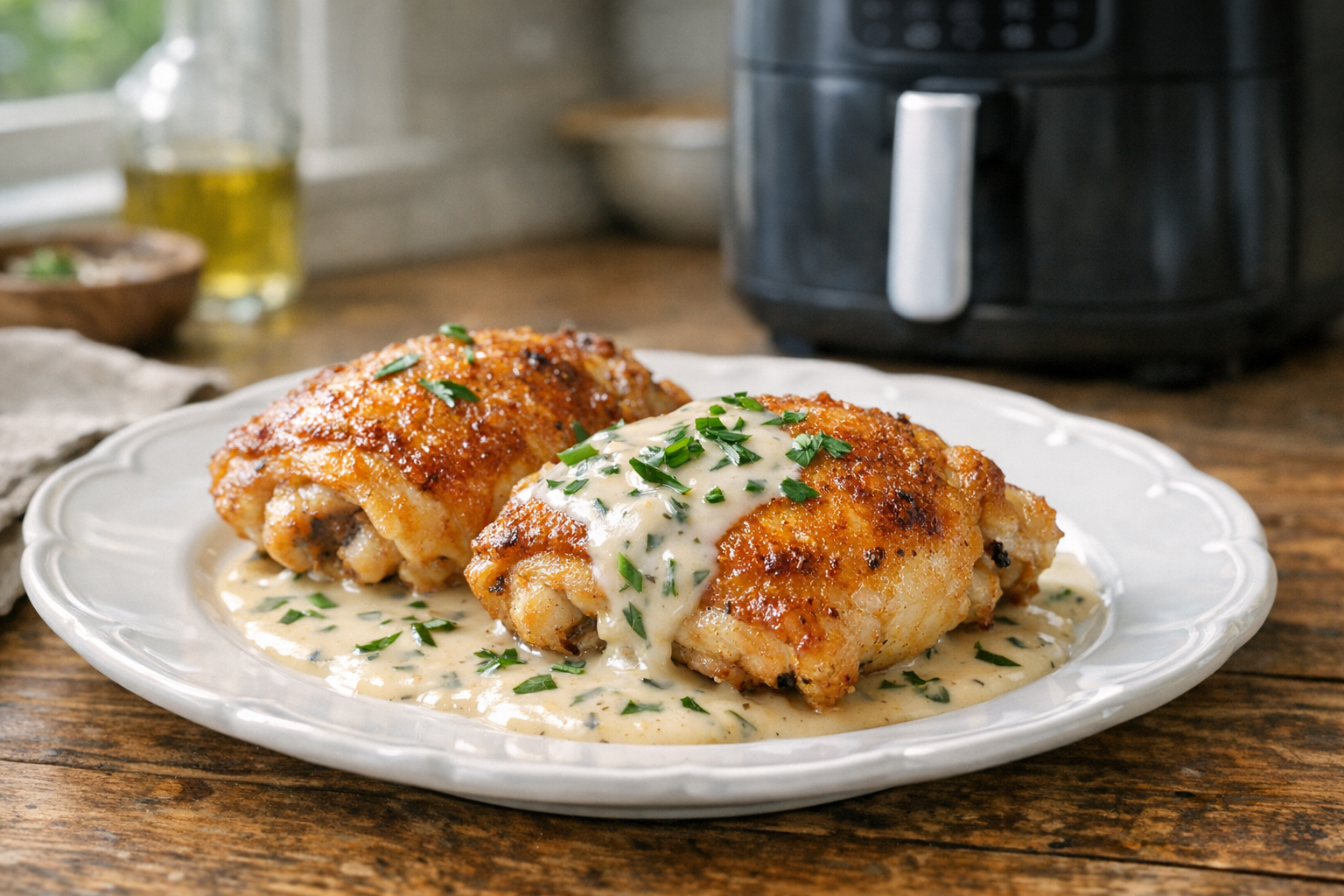
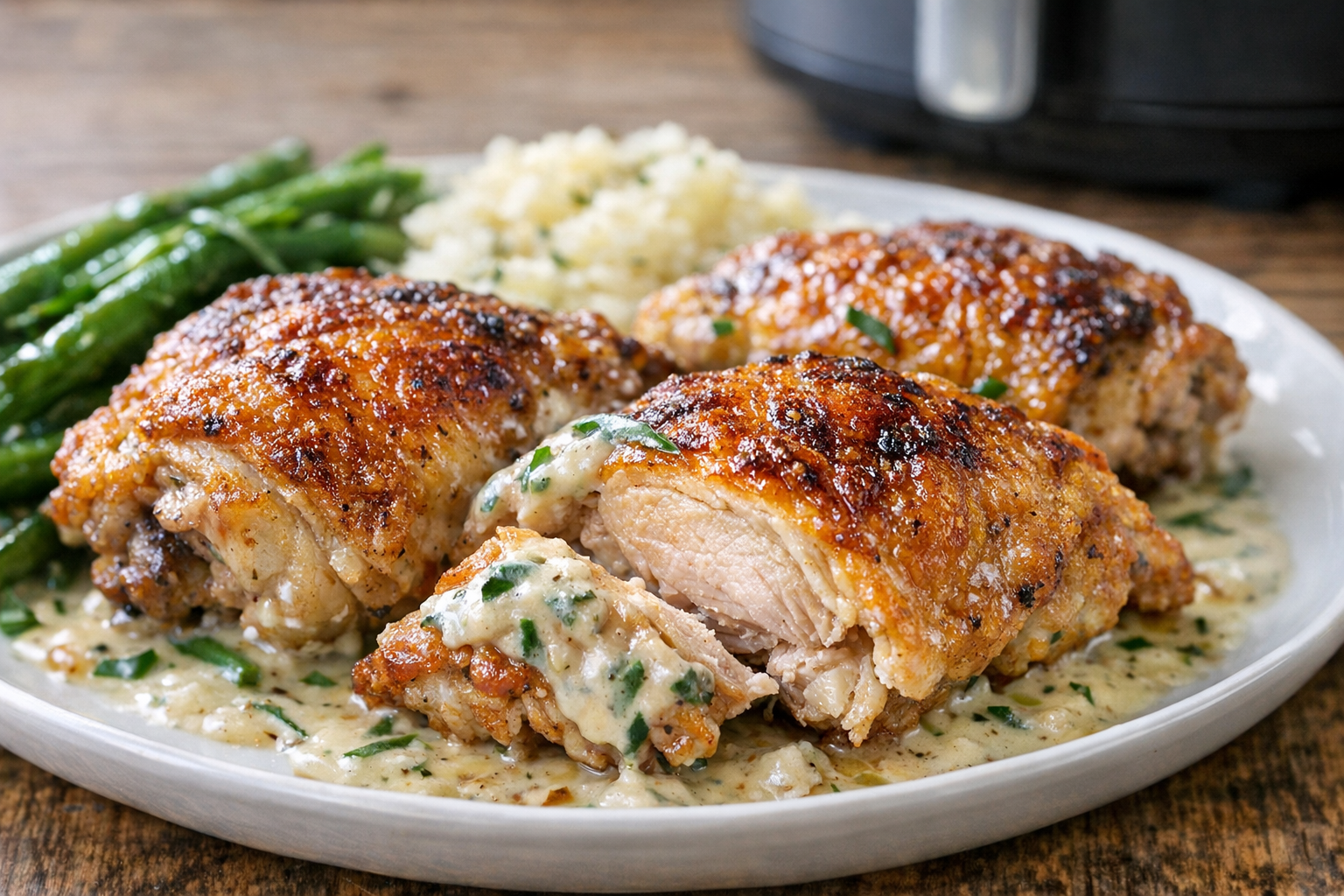
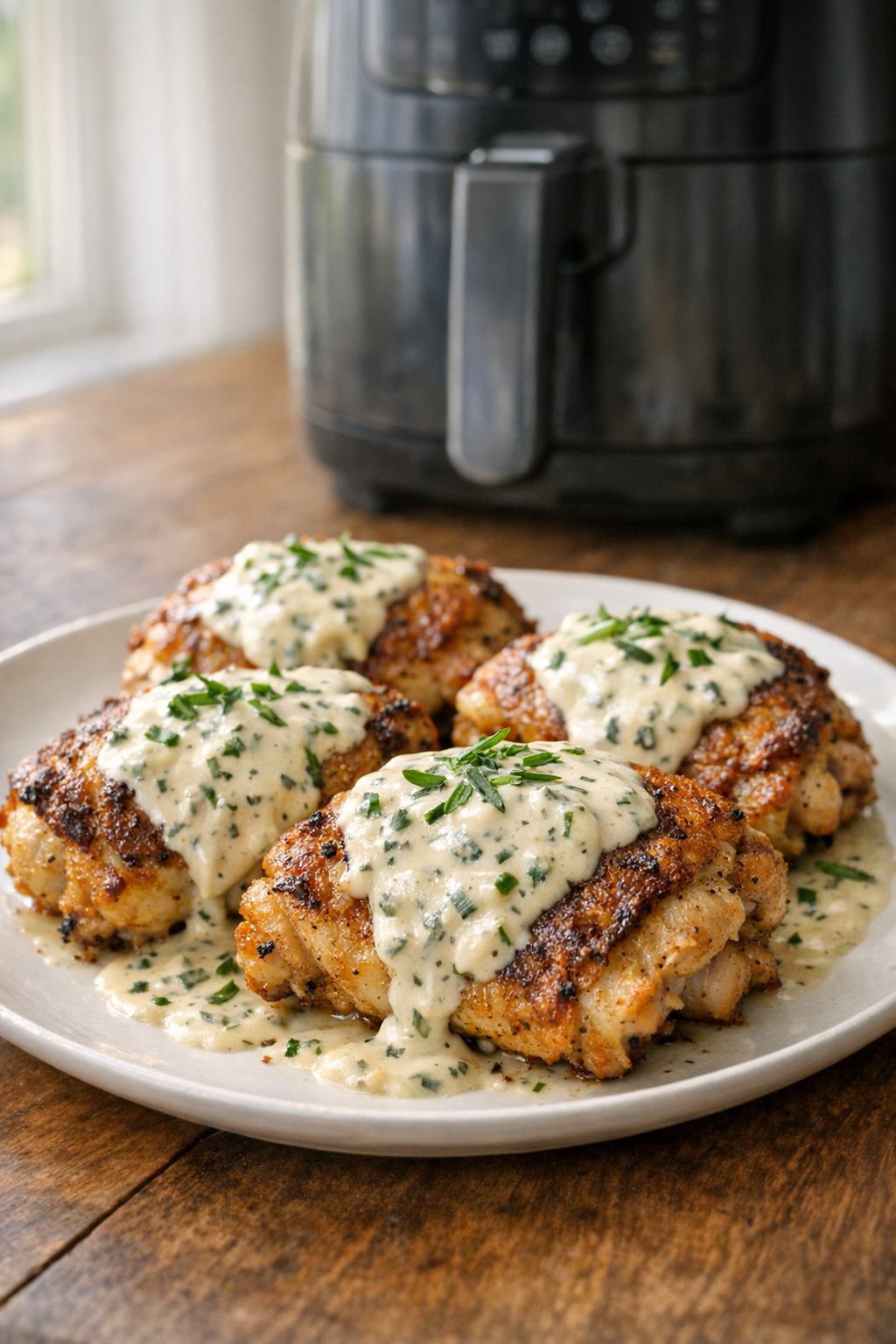
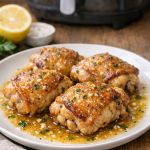
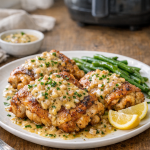
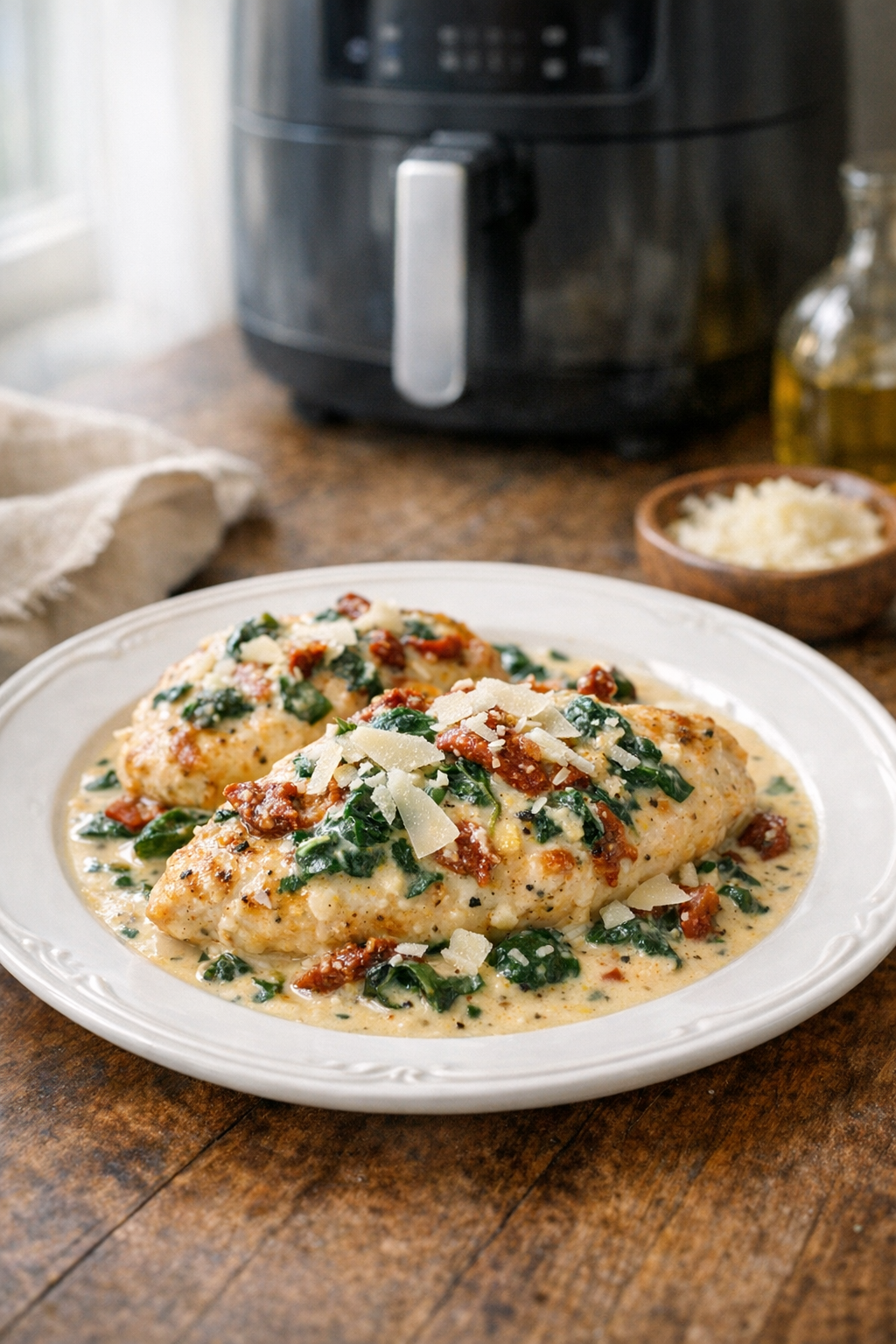
Crispy-skinned chicken thighs and a silky tarragon cream sauce make a weeknight dinner that feels a little dressed up without extra work. The air fryer handles the browning, while a quick stovetop sauce uses the drippings and takes only a few minutes.
Why This Air Fryer Recipe Works
Chicken thighs stay juicy in the air fryer because they have enough fat to handle high heat without drying out. Cooking them skin-side up at the end helps the skin turn golden and crisp.
The sauce is fast because it doesn’t rely on long simmering. A small splash of wine (or broth) loosens flavor from the pan, then cream and tarragon finish it into a spoonable sauce that clings to every bite.
Air fryer = crisp skin without deep frying
Thighs = forgiving, flavorful, and hard to overcook
Tarragon + Dijon = classic, savory-herby flavor
Ingredients You’ll Need
These are standard US grocery-store ingredients, and most are flexible if you need swaps.
Tarragon (fresh chopped preferred; dried works too)
Lemon juice (optional, to brighten)
How to Make Air Fryer Chicken Thighs with Creamy Tarragon Sauce in the Air Fryer
Plan on about 10 minutes of prep, then the air fryer does the heavy lifting while you make the sauce.
1) Season the chicken. Pat the thighs very dry with paper towels (this is key for crisp skin). Rub with a little oil, then season both sides with salt, pepper, garlic powder, and paprika.
2) Air fry. Preheat your air fryer if your model requires it. Arrange thighs in a single layer, skin-side down first (this helps render a little fat). Cook, then flip skin-side up to finish and crisp.
3) Rest the chicken. Move thighs to a plate and rest 5 minutes so juices settle while you make the sauce.
4) Make the creamy tarragon sauce. In a small skillet over medium heat, melt butter. Add shallot and cook until softened, then add garlic for 30 seconds.
5) Deglaze and reduce. Add wine (or broth) and scrape up any browned bits. Simmer 1–2 minutes, then add broth and simmer again briefly.
6) Finish the sauce. Reduce heat to low and stir in cream and Dijon. Simmer gently until slightly thickened, 2–4 minutes. Stir in tarragon and taste; add a pinch of salt, pepper, and a small squeeze of lemon if needed.
7) Serve. Spoon the creamy tarragon sauce over the chicken thighs (or serve it on the side to keep the skin extra crisp).
Air Fryer Time and Temperature
Cook times vary by brand and thigh size, so use these as a baseline and confirm doneness with a thermometer.
Temperature: 380°F
Total time: 18–24 minutes for bone-in, skin-on thighs
Flip: After 10–12 minutes, then finish skin-side up
Doneness: 175–185°F in the thickest part (thighs get more tender past 165°F)
If your thighs are small, start checking at 16–18 minutes. For very large thighs, you may need the full 24 minutes.
Tips for the Best Results
Dry skin = crisp skin. Pat the chicken dry and don’t skip it.
Don’t overcrowd. Leave space around each thigh so hot air can circulate. Cook in batches if needed.
Use a thermometer. Thighs are forgiving, but a quick check prevents undercooking.
Keep the sauce gentle. Once cream is in, avoid a hard boil so it stays smooth.
Serve sauce on the side for maximum crunch. Pouring sauce over the skin softens it faster.
If the skin isn’t as crisp as you want at the end, add 2–3 minutes at 400°F, watching closely. If your air fryer runs hot, reduce temp slightly and add time.
Variations and Substitutions
This recipe is easy to adjust based on what you have on hand.
Boneless, skinless thighs: Cook at 380°F for about 10–14 minutes total, flipping halfway. The sauce stays the same, but you’ll miss the crispy skin.
No wine: Use chicken broth with 1 teaspoon lemon juice or a small splash of white vinegar for brightness.
Dried tarragon: Use about 1 teaspoon dried instead of 1 tablespoon fresh; add it earlier so it blooms in the warm sauce.
Extra savory: Add 1–2 tablespoons grated Parmesan at the end.
Spicy edge: A pinch of red pepper flakes in the sauce pairs well with the cream.
What to Serve With It
The sauce is made for something that can soak it up, plus a crisp or green side to balance the richness.
Mashed potatoes or roasted baby potatoes
Buttered egg noodles or rice
Green beans, asparagus, or a simple side salad
Air fryer vegetables (especially broccoli or Brussels sprouts)
Store chicken and sauce separately if you can. Keeping the sauce off the skin helps it stay crisp when reheated.
Refrigerate: Up to 4 days in airtight containers
Freeze: Chicken freezes well up to 2 months; cream sauces can separate, so freeze sauce only if needed
To reheat chicken in the air fryer: Warm at 350°F for 4–7 minutes, then bump to 380°F for 1–2 minutes to re-crisp. Reheat sauce gently in a small pan over low heat, stirring often, and add a splash of broth if it thickens too much.
If you’re building a meal-prep rotation, Air Fryer Reheating Guide has more air fryer reheating ideas.
FAQ
How do I get chicken thigh skin crispy in the air fryer? Dry the skin well, use a light coat of oil, and don’t overcrowd the basket. Finish with the thighs skin-side up so the hot circulating air can crisp the surface.
What temperature should chicken thighs be cooked to? Chicken is safe at 165°F, but thighs taste more tender when they reach about 175–185°F. Check the thickest part without touching bone for the most accurate reading.
Can I make creamy tarragon sauce without heavy cream? Half-and-half works, but it will be thinner and can split if boiled hard. Keep the heat low and consider adding an extra teaspoon of Dijon to help it emulsify.
Can I cook frozen chicken thighs in the air fryer? It’s best to thaw for even cooking and proper seasoning coverage. If you must cook from frozen, expect a longer cook time and finish with an internal temperature check; the skin will be less crisp.
Why is my tarragon sauce bitter? Tarragon can taste sharp if overused or if the sauce reduces too far. Stir in a splash of cream or broth to soften it, and balance with a small squeeze of lemon.