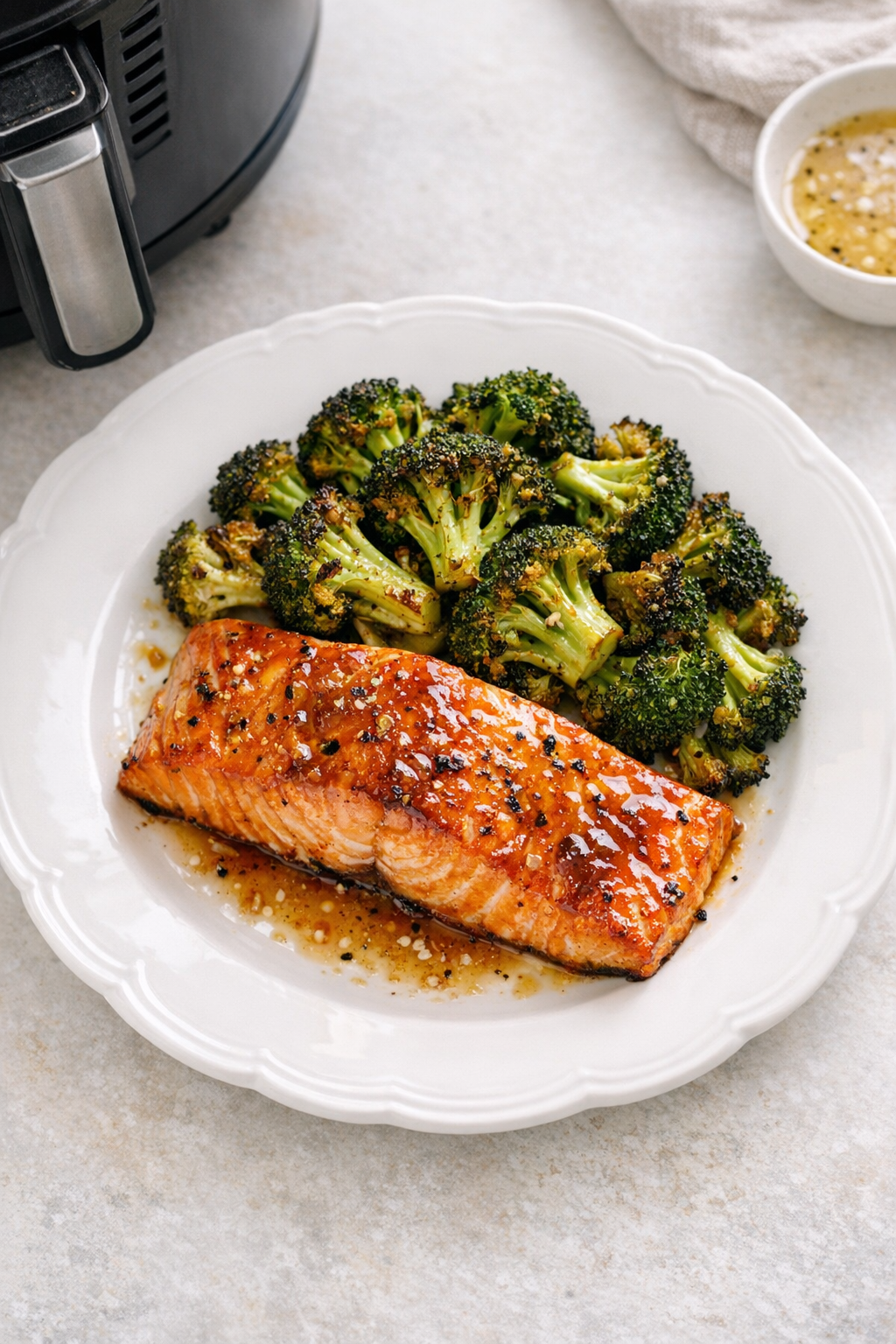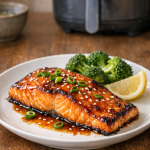
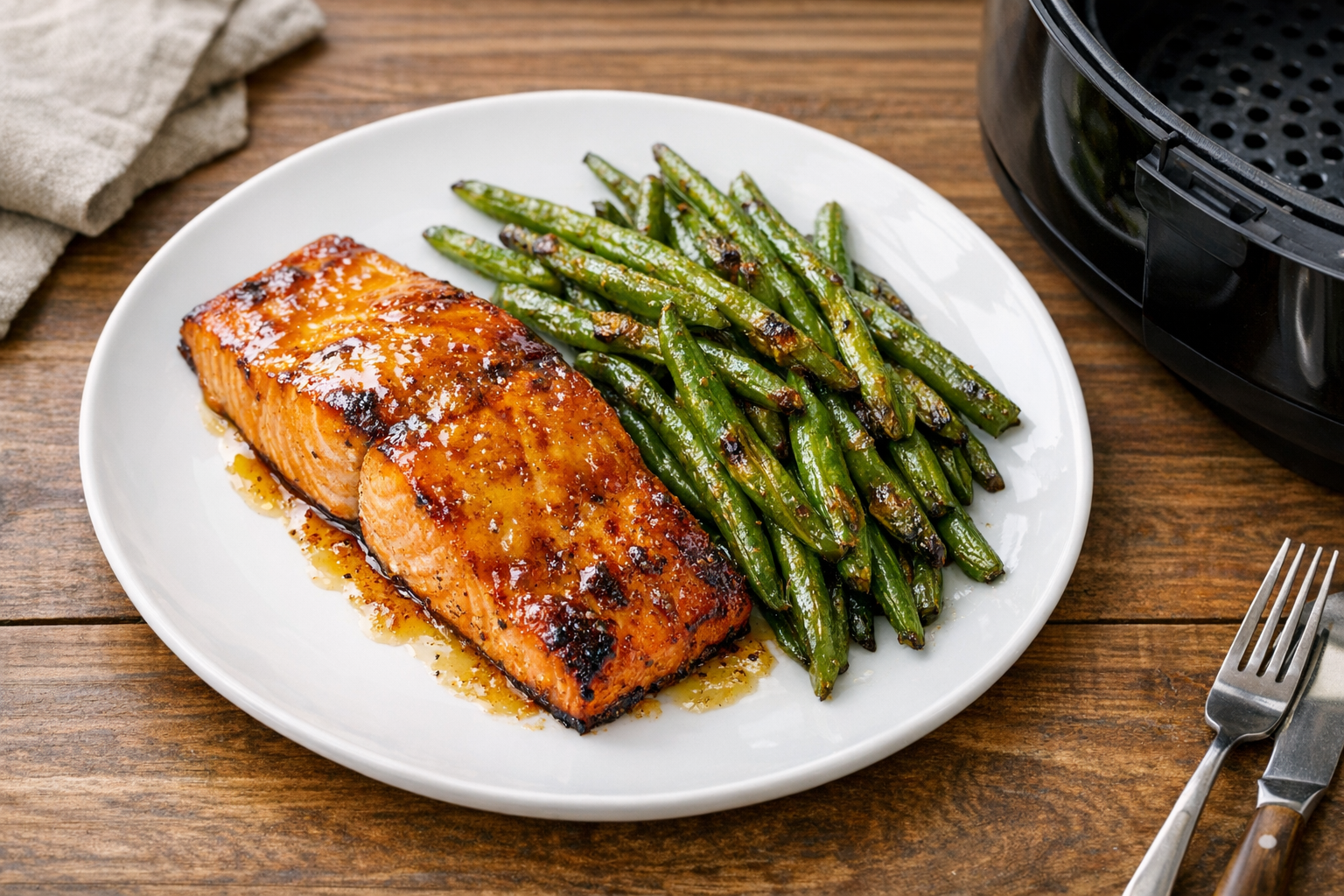
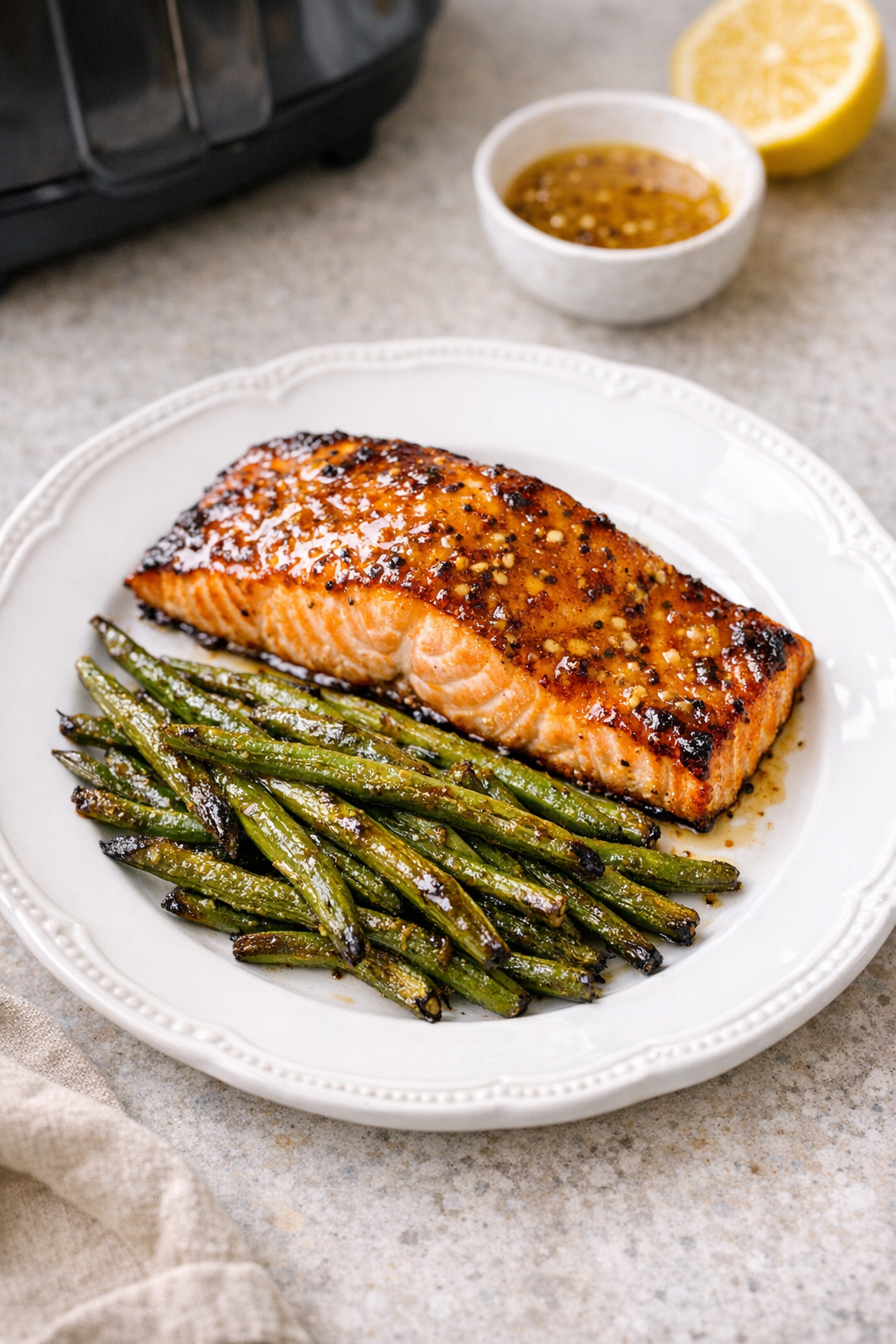
Air fryer honey mustard salmon with roasted green beans is the kind of weeknight dinner that feels put-together without making a mess of your kitchen. The salmon turns out tender with a glossy honey-mustard coating, while the green beans roast alongside until browned and snappy.
Why This Air Fryer Recipe Works
The air fryer’s fast, circulating heat gives you two big wins: salmon that cooks evenly without drying out, and green beans that actually roast instead of steaming.
A quick honey mustard sauce clings to the fish, caramelizes lightly at the edges, and keeps the center juicy. Cooking the beans in the same session means dinner comes together with minimal dishes.
- One main + one veggie, cooked with the same appliance
- Sweet-tangy glaze that doesn’t require marinating
- Reliable timing for common salmon fillet thicknesses
Ingredients You’ll Need
Choose center-cut salmon fillets when possible for the most even cooking. For the green beans, look for fresh beans that are firm and bright green.
- Salmon fillets (about 6 oz each, skin-on or skinless)
- Fresh green beans, trimmed
- Olive oil
- Kosher salt
- Black pepper
- Garlic powder (optional but helpful)
Honey mustard sauce:
- Honey
- Dijon mustard
- Whole grain mustard (or more Dijon)
- Lemon juice (or apple cider vinegar)
- Smoked paprika (optional for color and mild smokiness)
If your honey is very thick, warm it for a few seconds so it blends easily with the mustard.
How to Make Air Fryer Honey Mustard Salmon with Roasted Green Beans in the Air Fryer
1) Preheat the air fryer if your model benefits from it. Preheating helps the green beans start roasting right away.
2) Toss the green beans with olive oil, salt, pepper, and garlic powder. Spread them in the basket in a mostly single layer (a little overlap is fine).
3) Air fry the green beans for a head start, shaking once, until they begin to wrinkle and spot-brown.
4) Meanwhile, mix the honey, Dijon, whole grain mustard, lemon juice, and smoked paprika in a small bowl. Taste and adjust: more honey for sweeter, more Dijon for sharper.
5) Pat the salmon dry with paper towels, then season lightly with salt and pepper. Brush or spoon a thick layer of honey mustard sauce over the top of each fillet.
6) Move the green beans to the sides of the basket to make space in the center, or remove them to a plate if your basket is small. Add the salmon (skin-side down if using skin-on).
7) Air fry until the salmon flakes easily and the thickest part is just cooked through. If you like, brush on another thin layer of sauce right after cooking for extra shine.
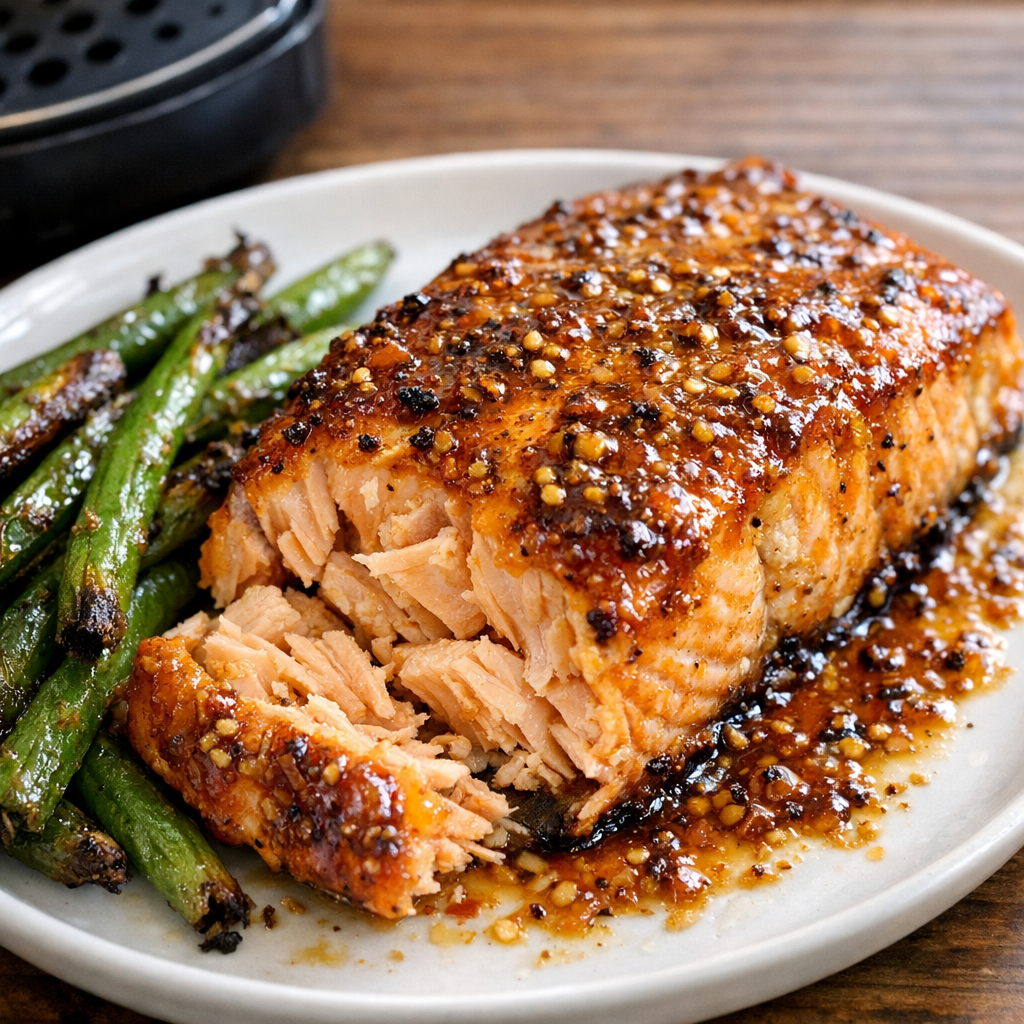
8) Finish the green beans with a quick final shake and a pinch of salt if needed. Serve immediately with lemon wedges.
Air Fryer Time and Temperature
Every air fryer runs a little differently, so use the time as a guide and check early if your fillets are thin.
- Temperature: 390°F
- Green beans: 10–12 minutes total, shaking halfway
- Salmon (about 1-inch thick): 7–10 minutes
If you’re cooking salmon closer to 1 1/2 inches thick, plan on 10–12 minutes. For very thin fillets (under 3/4 inch), start checking around 6 minutes.
For doneness, look for salmon that flakes with a fork and turns opaque through most of the center. If you use an instant-read thermometer, many home cooks pull salmon around 125–135°F and let it rest briefly, but choose your preferred doneness.
Tips for the Best Results
Dry salmon browns better. A quick pat with paper towels helps the glaze cling and reduces steaming.
- Don’t drown the fish in sauce: a thick, even coat works best and won’t drip as much.
- Give the beans space: overcrowding makes them soft. Cook in two batches if needed.
- Shake, don’t stir: shaking keeps the beans intact and helps them brown evenly.
- Watch the sugar: honey can darken quickly. If your air fryer runs hot, drop to 380°F.
If the salmon is done before the beans, pull the salmon to a plate and tent loosely with foil. Finish the beans for a couple more minutes.
Variations and Substitutions
Small tweaks can take this in a different direction without changing the method.
- Spicy: add 1–2 teaspoons hot sauce or a pinch of cayenne to the honey mustard.
- Extra tangy: swap lemon juice for apple cider vinegar, or add a little zest.
- Different veggies: try asparagus (less time) or broccoli florets (similar time, more shaking).
- No whole grain mustard: use all Dijon, or add a pinch of dried thyme for dimension.
If you’re using frozen green beans, expect softer results. Thaw and dry well, then cook hotter and longer to drive off moisture.
What to Serve With It
This salmon and green bean combo pairs well with simple, neutral sides that catch extra sauce.
- Steamed rice, brown rice, or quinoa
- Roasted baby potatoes (air fryer or oven)
- Simple side salad with vinaigrette
- Crusty bread to swipe the plate
For another quick air fryer side, add Air Fryer Recipes.
Storage and Reheating
Store leftover salmon and green beans in separate airtight containers if possible. Refrigerate for up to 3 days.
To reheat, the air fryer works better than the microwave for keeping the beans from getting soggy. Reheat at 350°F until warmed through, usually 3–5 minutes for salmon and 2–4 minutes for green beans, depending on thickness.
If you want more air fryer meal prep ideas, see Air Fryer Reheating Guide.
FAQ
Can I use frozen salmon for air fryer honey mustard salmon?
Yes, but thawing gives the best texture and helps the sauce stick. If cooking from frozen, skip the sauce at first, air fry a few minutes to thaw the surface, then add the honey mustard and finish cooking.
Do I need to flip the salmon in the air fryer?
Usually not. Cooking skin-side down (or presentation-side up for skinless) keeps the glaze on top and prevents sticking. Flip only if your model cooks unevenly and you notice undercooking on one side.
How do I keep green beans from turning soft?
Dry them well after rinsing, use enough heat (around 390°F), and avoid overcrowding the basket. Shaking once or twice helps moisture escape so they roast instead of steam.
What if my honey mustard sauce is too sweet or too sharp?
Balance it before brushing: add more Dijon to cut sweetness, or more honey to mellow sharpness. A small squeeze of lemon can brighten everything without making it taste sour.
Can I make this with salmon portions that have skin?
Absolutely. The skin can help protect the fish from overcooking, and it makes the fillet easier to lift out. If you like crispy skin, place the salmon skin-side down and add sauce only on the flesh side.