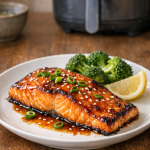
This air fryer salmon with honey garlic glaze and lemon is a fast, flavorful dinner that tastes like you put in way more effort than you did. The glaze turns glossy and sticky, the edges brown nicely, and a squeeze of lemon keeps everything bright.
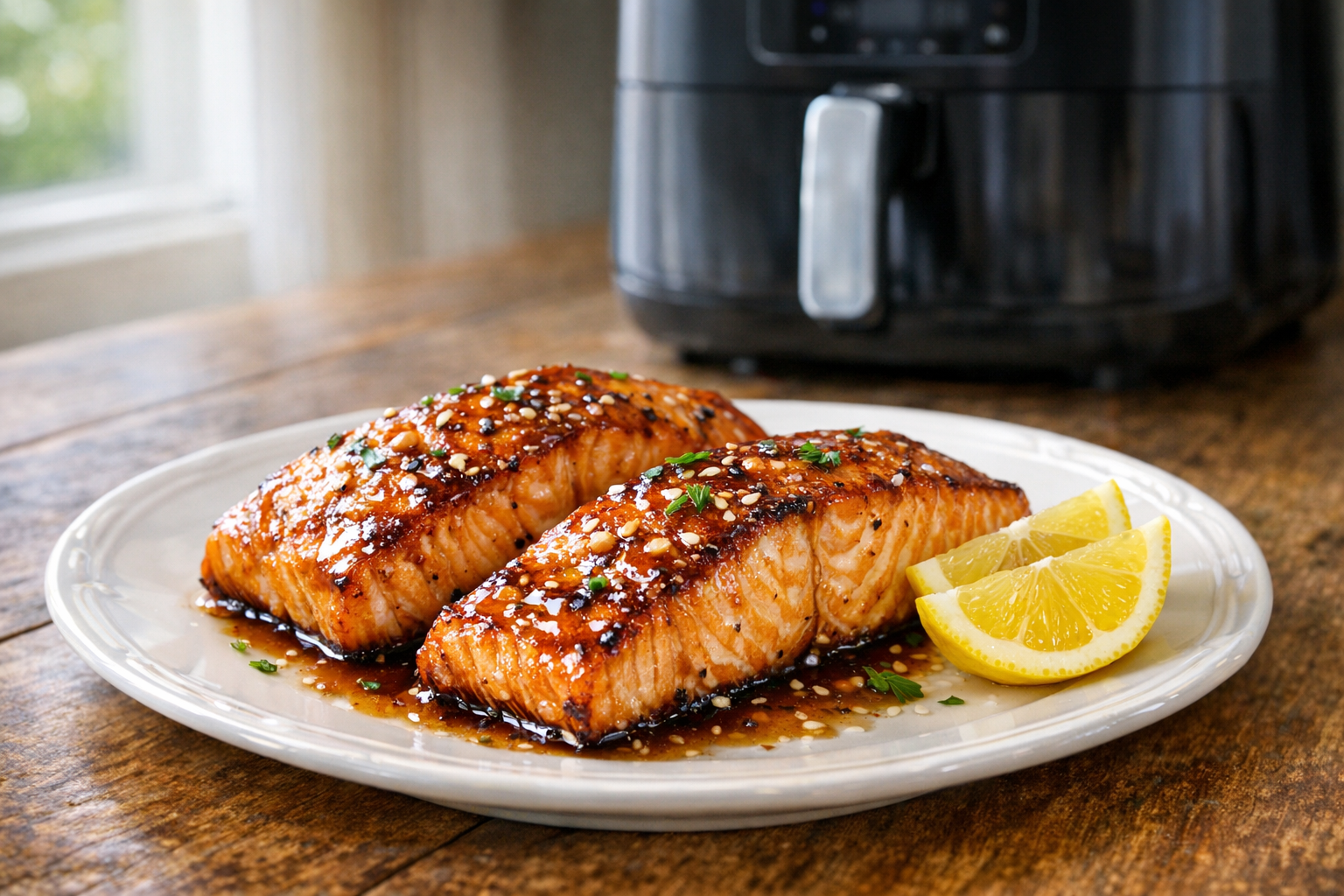
Why This Air Fryer Recipe Works
The air fryer cooks salmon quickly with steady circulating heat, so you get a tender center without babysitting a pan. A simple honey-garlic-soy style glaze caramelizes in minutes, giving you big flavor with minimal ingredients.
Adding lemon at the end (and a little zest if you want) balances the sweetness and makes the salmon taste fresh, not heavy. It’s also easy to scale for two fillets or four without changing your whole approach.
Ingredients You’ll Need
- Salmon fillets (skin-on or skinless, about 5–7 oz each)
- Honey
- Soy sauce (regular or low-sodium)
- Garlic (fresh minced or finely grated)
- Lemon (juice, plus wedges for serving; optional zest)
- Olive oil or avocado oil (just a little for the basket and/or fish)
- Kosher salt
- Black pepper
- Optional: red pepper flakes for gentle heat
- Optional garnish: sliced green onions or chopped parsley (keep it simple)
Choose fillets of similar thickness so they finish at the same time. If you’re using frozen salmon, thaw fully and pat it dry before seasoning.
How to Make Air Fryer Salmon with Honey Garlic Glaze and Lemon in the Air Fryer
1) Preheat the air fryer for a few minutes (this helps browning). Lightly oil the basket or use perforated parchment made for air fryers.
2) Pat the salmon dry with paper towels. Season lightly with salt and pepper. If using skin-on, place skin-side down so the flesh stays protected and juicy.
3) Make the glaze: stir together honey, soy sauce, garlic, and a squeeze of lemon juice. If you like a little heat, add a pinch of red pepper flakes.
4) Brush or spoon a thin layer of glaze over the salmon. Save the rest for finishing.
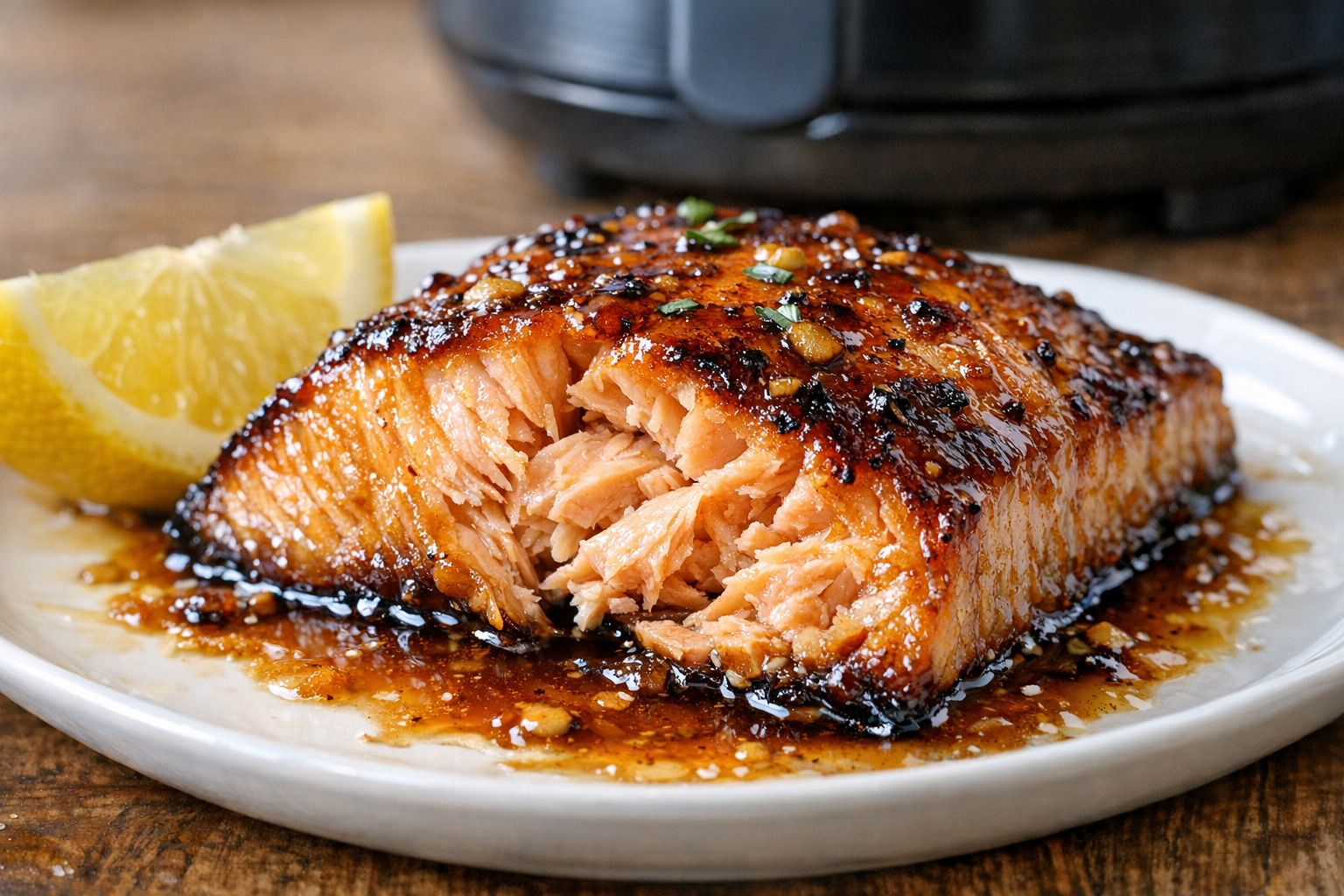
5) Air fry until the salmon is cooked through and flakes easily with a fork. The glaze should look shiny and lightly caramelized.
6) Right after cooking, brush on a little more glaze and finish with fresh lemon juice (and optional lemon zest). Serve with lemon wedges.
- For less mess: line the basket with perforated parchment, not regular parchment.
- For thicker fillets: plan on a few extra minutes and check early.
Air Fryer Time and Temperature
Set the air fryer to 390°F. For average fillets (about 1 to 1 1/4 inches thick), cook for 7–10 minutes.
Exact timing depends on thickness and starting temperature. Begin checking at 7 minutes, especially if your fillets are on the thinner side or your air fryer runs hot.
- Thin fillets (under 1 inch): 6–8 minutes at 390°F
- Average fillets (1–1 1/4 inch): 7–10 minutes at 390°F
- Thick fillets (1 1/2 inch+): 10–12 minutes at 390°F (check and add time as needed)
Tips for the Best Results
Dry salmon browns better. Take 30 seconds to blot the surface well so the glaze sticks and caramelizes instead of sliding off.
Don’t drown the fish in glaze before cooking. A thin layer prevents scorching and keeps cleanup easier; you can add more after cooking for that glossy finish.
Avoid overcooking by checking early. Salmon continues to carry over slightly after you pull it, and the air fryer’s high heat can push it from tender to dry quickly.
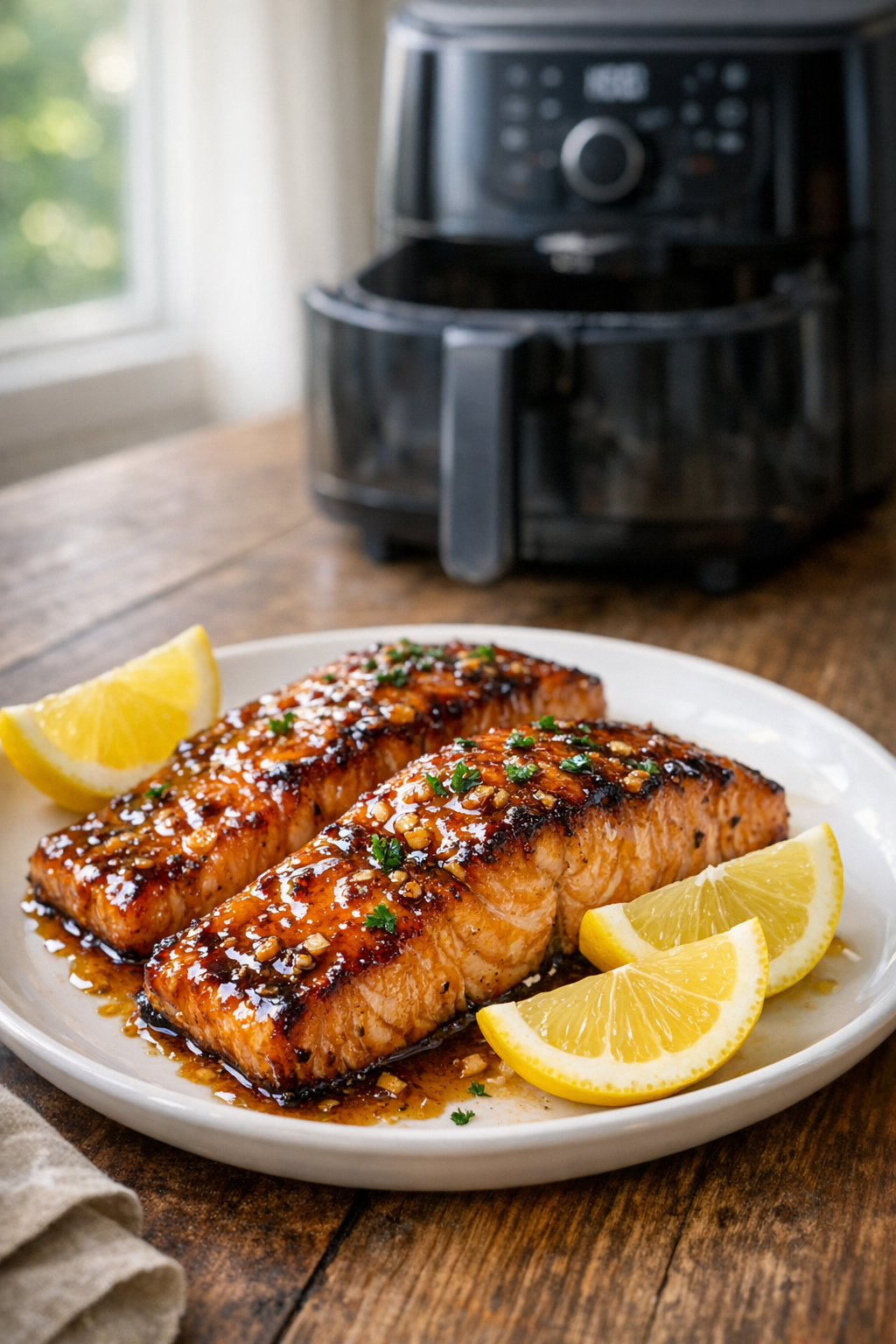
- If your glaze is browning too fast: lower to 375°F and cook a little longer.
- If your salmon sticks: use a light oil spray and let it sit 1 minute after cooking before lifting.
- If you want more browned edges: preheat well and keep space between fillets.
Variations and Substitutions
Swap in maple syrup for honey for a deeper sweetness. It’ll still caramelize nicely in the air fryer.
For a citrus-forward version, add extra lemon zest to the glaze and finish with another squeeze of lemon right before serving.
Need gluten-free? Use tamari or a gluten-free soy sauce. If you prefer less sodium, go with low-sodium soy sauce and keep the added salt minimal.
You can also use this same glaze on air fryer shrimp or chicken, but adjust cook times accordingly and avoid over-glazing before cooking.
What to Serve With It
This salmon is great with simple sides that can catch extra glaze. Think rice, potatoes, or crisp green veggies.
- Steamed jasmine rice or coconut rice
- Air fryer asparagus or green beans
- Roasted baby potatoes or mashed potatoes
- Simple cucumber salad with lemon and a pinch of salt
- A quick slaw (cabbage, lemon, olive oil)
For more air fryer sides, see Air Fryer Recipes.
Storage and Reheating
Store leftover salmon in an airtight container in the refrigerator for up to 3 days. Keep lemon wedges separate so the fish doesn’t get overly acidic in storage.
To reheat, use the air fryer at 320°F for 3–5 minutes, just until warmed through. Add a tiny brush of leftover glaze (or a squeeze of lemon) after reheating to freshen the flavor.
More reheating tips here: Air Fryer Reheating Guide.
FAQ
Can I use frozen salmon in the air fryer?
Yes, but it’s best thawed for this glazed version. The glaze sticks and caramelizes more evenly on thawed, well-dried salmon. If you must cook from frozen, cook the salmon plain for a few minutes first, then glaze near the end.
Do I need to flip salmon in the air fryer?
Usually no. Cooking skin-side down (or presentation-side up for skinless) keeps the glaze on top and helps the salmon stay juicy. Flipping can smear the glaze and increase sticking.
How do I keep honey garlic glaze from burning?
Use a thin layer before cooking and save most of the glaze for after. If your air fryer runs hot, drop the temperature to 375°F and cook slightly longer. Also avoid letting garlic clumps sit on top, since they can brown quickly.
How do I know when the salmon is done?
The salmon should flake easily with a fork and look opaque on the outside with a slightly deeper color in the center depending on preference. Start checking early, since thickness varies a lot. If it still looks very translucent and feels soft/raw, give it another 1–2 minutes.
Can I make this with skin-on salmon?
Absolutely. Skin-on salmon holds together well in the air fryer and helps protect the flesh from drying out. If you don’t plan to eat the skin, it still makes the fillet easier to lift out cleanly.