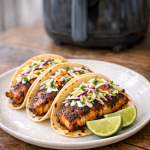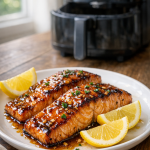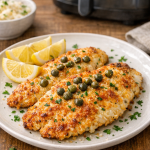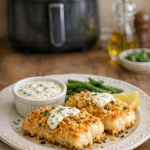
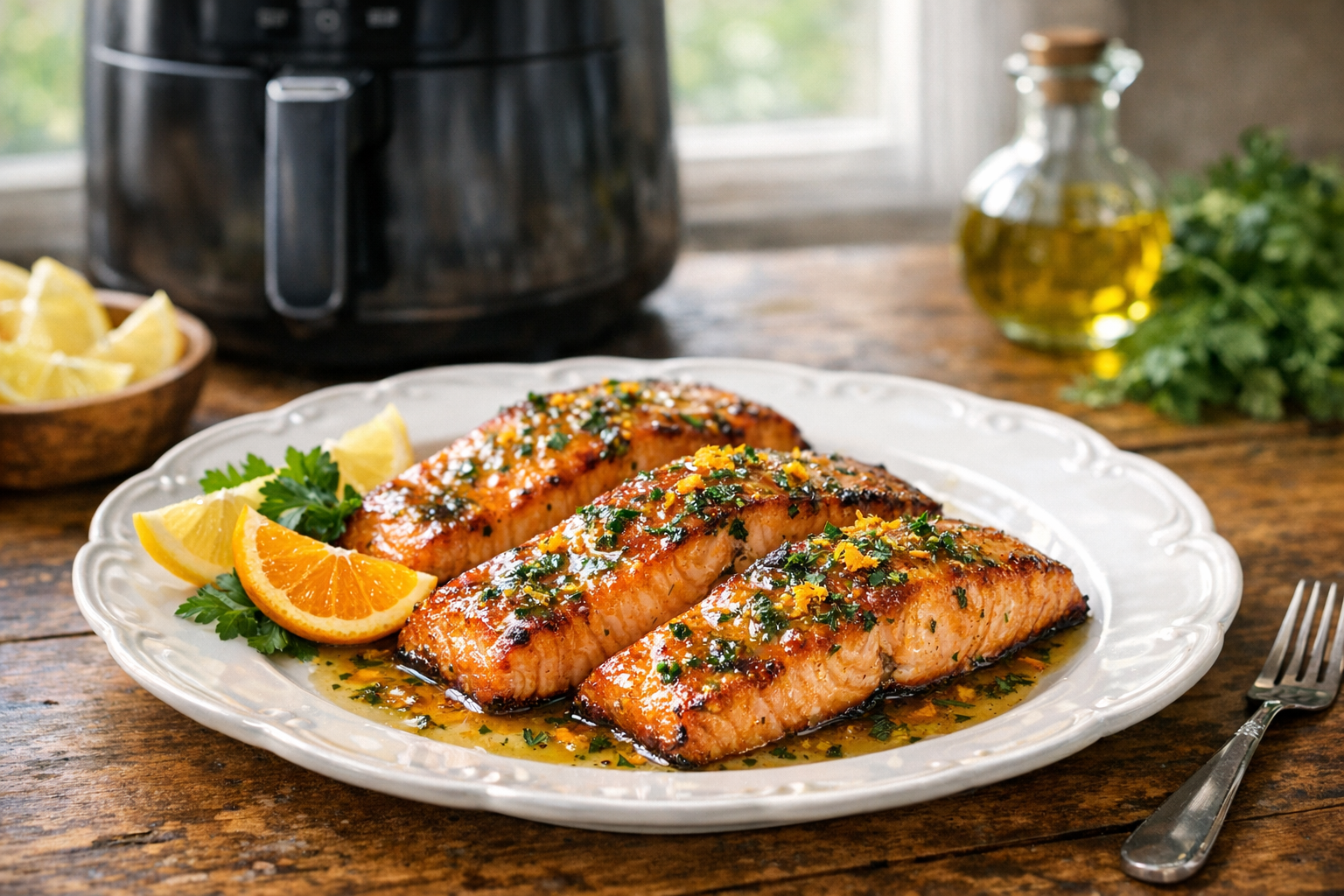
When you want salmon that tastes bright and fresh without turning on the oven, this air fryer version delivers. The citrus herb glaze comes together in minutes and turns glossy as it hits the hot salmon.
Why This Air Fryer Recipe Works
The air fryer cooks salmon quickly with steady circulating heat, so the exterior sets while the inside stays tender. A quick glaze at the end keeps the fish from tasting “boiled” in sauce and gives you clean, bold flavor.
Using citrus zest plus juice builds a stronger citrus pop than juice alone. Fresh herbs add lift, and a touch of honey balances the tartness so the glaze tastes rounded, not sharp.
Ingredients You’ll Need
- 4 salmon fillets (about 5–6 oz each), skin-on or skinless
- 1 tbsp olive oil
- 3/4 tsp kosher salt (plus more to taste)
- 1/4 tsp black pepper
- 1/2 tsp garlic powder (or 1 small fresh garlic clove, finely grated)
- Zest of 1 orange
- Zest of 1 lemon
- 2 tbsp fresh orange juice
- 1 1/2 tbsp fresh lemon juice
- 1 1/2 tbsp honey (or maple syrup)
- 1 tbsp Dijon mustard
- 1 tbsp chopped fresh parsley
- 2 tsp chopped fresh dill (or basil)
- 1 tsp chopped fresh chives (optional)
- Red pepper flakes (optional, pinch for gentle heat)
If your salmon has pin bones, pull them out with tweezers before cooking. For the best texture, aim for fillets of similar thickness so they finish at the same time.
How to Make Air Fryer Salmon with Citrus Herb Glaze in the Air Fryer
1) Preheat and prep. Preheat your air fryer to 390°F for 3–5 minutes. Lightly coat the basket with oil spray or brush it with a thin layer of oil (especially helpful for skinless fillets).
2) Season the salmon. Pat the salmon dry with paper towels. Rub with olive oil, then season with salt, pepper, and garlic powder on the flesh side.
3) Mix the glaze. In a small bowl, whisk orange zest, lemon zest, orange juice, lemon juice, honey, Dijon, parsley, dill, and chives. Add a pinch of red pepper flakes if you want a little heat.
4) Air fry. Place salmon in the basket in a single layer, leaving space around each fillet. Cook until the salmon flakes easily and the center is just opaque.
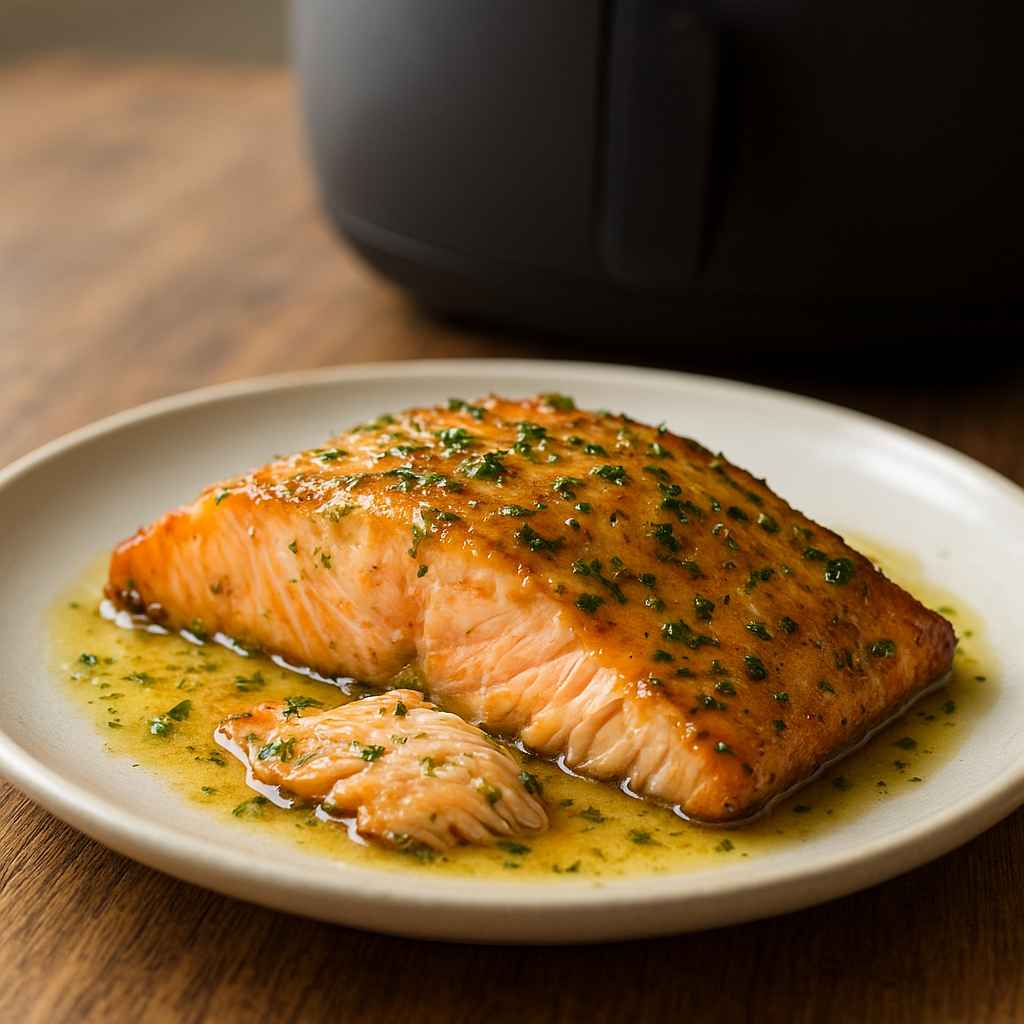
5) Glaze and finish. Brush or spoon glaze over the salmon during the last 1–2 minutes of cooking. If you prefer a thicker, stickier finish, add a second quick brush right after it comes out.
6) Rest briefly. Let the salmon rest 2 minutes before serving so the juices settle and the glaze clings.
Air Fryer Time and Temperature
Cook at 390°F for 7–10 minutes, depending on thickness. Thinner fillets (about 1 inch thick) often finish closer to 7–8 minutes; thicker center-cut pieces may take 9–10 minutes.
- Skin-on: place skin-side down for easier release and a cleaner top surface for glazing.
- Doneness check: the fish should flake with gentle pressure and look opaque in the center.
- Thermometer option: pull when the thickest part reaches your preferred level of doneness; carryover heat will continue cooking slightly as it rests.
Air fryers vary. If this is your first time making salmon in your model, start checking at 7 minutes and add time in 1-minute steps.
Tips for the Best Results
- Dry the surface well: moisture is the enemy of good browning and glaze cling.
- Don’t glaze too early: sugars in honey can darken quickly. Add glaze near the end.
- Use zest: it gives a big citrus aroma without adding extra liquid.
- Leave space: airflow matters; crowding can lead to steaming.
- Easy cleanup: if your air fryer allows it, use a parchment liner with holes (don’t block airflow) and place it in only after preheating.
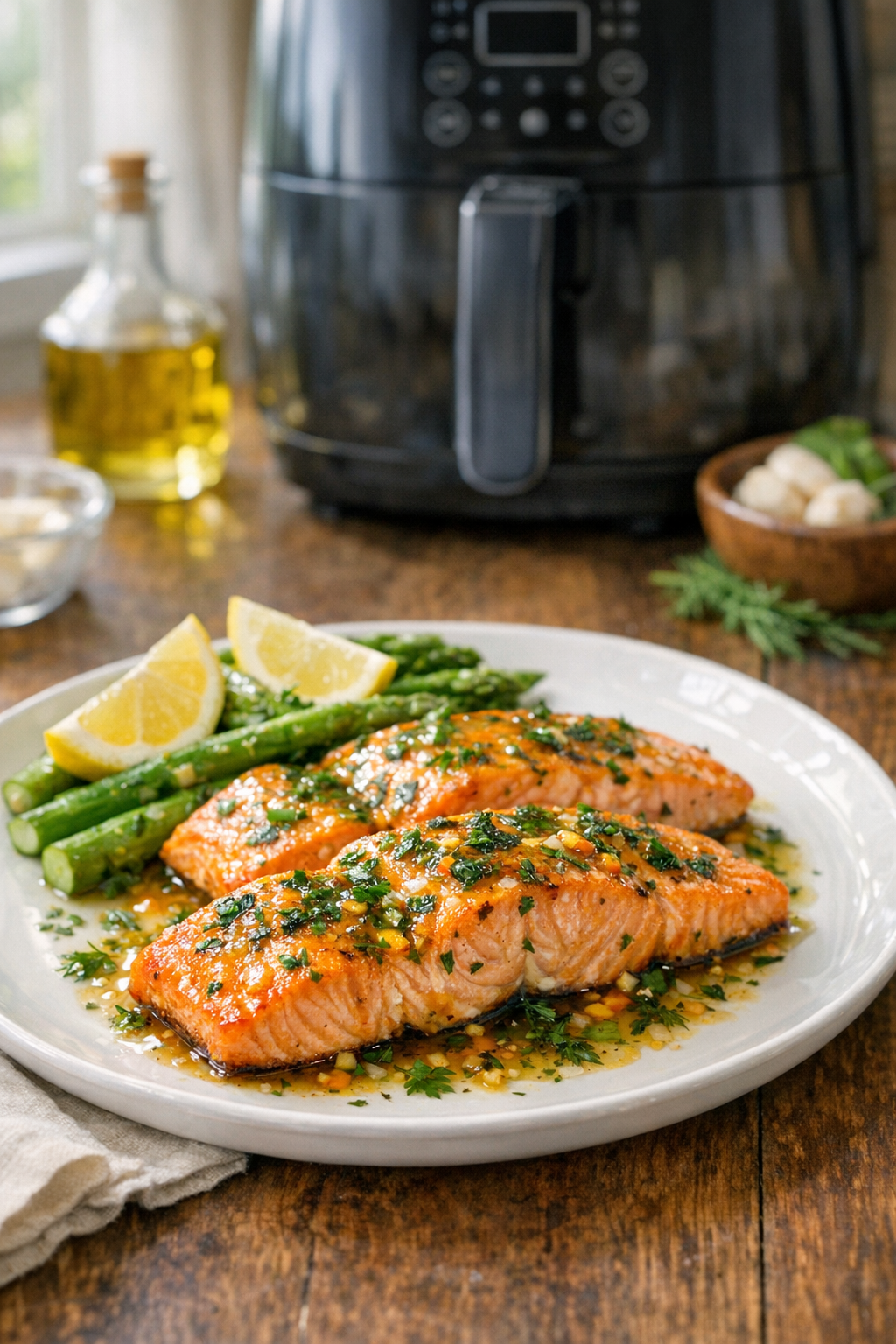
If the glaze looks thin, that’s normal—it thickens slightly as it warms and again as it cools on the fish. For a more syrupy glaze, whisk in an extra teaspoon of honey.
Variations and Substitutions
- Grapefruit swap: replace orange with grapefruit for a sharper, more grown-up citrus flavor.
- Maple-Dijon: use maple syrup instead of honey and add extra black pepper.
- Garlic-forward: use fresh grated garlic instead of garlic powder for a punchier bite.
- Different herbs: basil, tarragon, or cilantro all work; choose one or two so the glaze doesn’t taste muddled.
- Other fish: try the same glaze on air fryer trout or Arctic char; reduce cook time for thinner fillets.
What to Serve With It
This salmon leans bright and herby, so it pairs well with simple sides that let the glaze stand out. Add something crisp or starchy to round out the plate.
- Air fryer asparagus or broccolini with lemon
- Rice, quinoa, or couscous to catch extra glaze
- Roasted baby potatoes or air fryer sweet potato chunks
- Simple cucumber salad or mixed greens with a light vinaigrette
Need another air fryer side? Air Fryer Recipes
Storage and Reheating
Store leftover salmon in an airtight container in the refrigerator for up to 3 days. Keep it in a single layer if possible so the glaze doesn’t get wiped off when you stack pieces.
To warm it back up without drying it out, use a lower air fryer temperature: 320°F for 3–5 minutes, just until heated through. For more reheating ideas and timing, Air Fryer Reheating Guide.
Cold leftover salmon is also great flaked over salad or tucked into a rice bowl with extra lemon.
FAQ
- Do I need to flip salmon in the air fryer?
Usually, no. Cooking skin-side down (or presentation-side up for skinless) keeps the top surface intact for glazing. If your fillets are unusually thick on one side, rotating the basket halfway through helps more than flipping. - How do I keep salmon from sticking to the air fryer basket?
Preheat the air fryer, then lightly oil the basket (or the salmon). Skin-on fillets release more easily when cooked skin-side down. Avoid moving the fish too early; it releases better once the surface has cooked. - Can I use bottled lemon/orange juice instead of fresh?
Fresh juice tastes brighter, but bottled works in a pinch. If using bottled, don’t skip the zest—zest is what brings the “fresh citrus” aroma back. - Why is my glaze turning dark?
Honey can brown fast at high heat. Brush the glaze on during the last 1–2 minutes, and skip broiling-style high temps. If your air fryer runs hot, drop to 375°F and add a minute or two. - Can I cook frozen salmon in the air fryer for this recipe?
You can, but the glaze adheres best to thawed, well-dried salmon. If cooking from frozen, air fry until the surface is no longer icy, pat dry carefully, season, then finish cooking and glaze near the end.